


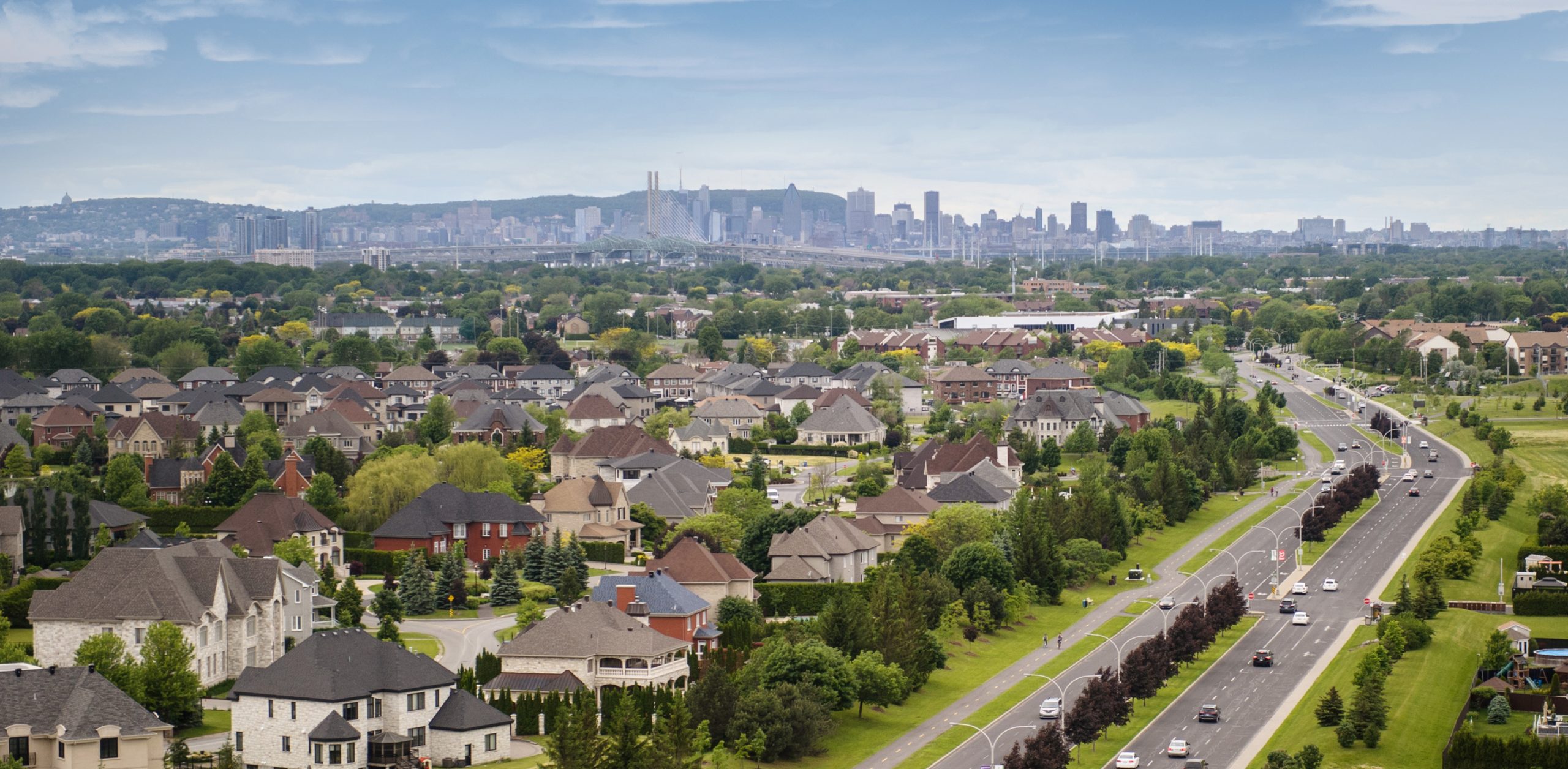
The cost of living in Montreal vs South Shore became a central issue for many Quebec households in 2026. Between the rapid rise in rents, the increase in property prices and the pressure on family budgets, comparing Montreal to the South Shore is no longer a simple curiosity, but an essential step before moving. Longueuil, Brossard and Boucherville are attracting more and more people looking for a better balance between real costs, accessibility and quality of life.
The purpose of this comparative guide is to present concrete and current data to help readers assess their financial situation before a potential move. It is aimed at families as well as young professionals or people newly established in Quebec who want to make an informed decision, based on numbers rather than perceptions.
Comparing the cost of living between Montreal and the South Shore is particularly relevant in the current context of the housing crisis. According to data from the SCHL, rents on the South Shore have increased by 50 to 67% since 2018, while Montreal remains one of the most expensive markets in Quebec. The average price of a property on the island is around $845,000, compared to nearly $522,000 in Longueuil.
This difference directly influences residential decisions. Families are looking to reduce monthly expenses while saving space. Young professionals assess whether they can save money without straying too far from the workplace. Newcomers try to optimize their budget as soon as they settle in. In 2026, the choice between Montreal and the South Shore is based on financial factors, but also on accessibility, quality of life and long-term stability.
Rental housing remains the main item of expenditure for the majority of households. In Montreal, the average rent for a 4½ unit in 2026 was between $1,400 and $1,600 per month, depending on the sector. This average reflects constant pressure on the market, fuelled by a low vacancy rate.
In Longueuil, the average rent is estimated at around $1,133 per month. In the area combining Brossard and Boucherville, the average is around $1,340. Despite significant increases since 2018, the gap with Montreal remains significant. Boucherville saw an increase of approximately 67%, Brossard 55% and Longueuil 52%.
Vacancy rates confirm market tension. Longueuil shows about 1.3 percent, while zone 31 including Brossard and Boucherville reaches nearly 2.5%. Finding housing is still a challenge, but the South Shore still offers more affordable options than the island.
TO Longueuil, rents vary by neighborhood. Old Longueuil and areas near the metro have higher prices, often between 1,300 and 1,400 dollars for a 4½. Saint-Hubert and Greenfield Park still offer housing between 1,100 and 1,250 dollars. The proximity of the Longueuil-Université-de-Sherbrooke metro station is exerting upward pressure on prices.
TO Brossard, the arrival of the REM transformed the rental market. One-bedroom units generally rent between $1,200 and $1,400, while two-bedroom units are between $1,500 and $1,800. New condos near DIX30 or REM stations often exceed $2,000 per month.
Boucherville remains a smaller market for renters. The rental stock is limited and more oriented towards the property. When available, 4½ units are rented for around $1,370. This rarity contributes to maintaining relatively high prices.
For buyers, the price gap is even greater. In 2026, the average price of a property in Montreal reached approximately $845,000. In Longueuil, the average price resulting from the 2026 land roll is around $545,700. Brossard has an average of around 741,400 dollars, while Boucherville is around 721,300 dollars.
Depending on the city chosen, the potential savings vary from 100,000 to more than 300,000 dollars at the time of purchase. The expected increases in property values between 37 and 40% on the 2026-2027 rolls indicate that the South Shore remains an attractive market for long-term buyers.
Longueuil offers an excellent balance between price and accessibility. Properties there are much cheaper than on the island, while benefiting from direct access to the metro. The diversity of neighborhoods and types of properties attracts first-time buyers as well as established families.
Brossard benefits from the development of the REM and from a large number of new condos. Boucherville, with its heritage character and high-end properties, attracts customers looking for stability and quality of life. In both cases, real estate appreciation remains sustained.

In Montreal, a monthly STM pass costs around $100. On the South Shore, a combined RTL and metro pass varies between 115 and 140 dollars depending on the zone. The REM in Brossard considerably improves accessibility and reduces travel times.
For motorists, you have to consider gas, insurance and sometimes parking. However, savings in housing often make up for these additional costs, especially for households that work partially from home.
The Longueuil-Université-de-Sherbrooke station allows you to reach downtown in 15 to 20 minutes via the yellow line. This speed is a major advantage for workers.
Brossard REM stations offer a direct connection to the Central Station. This increased accessibility directly influences the attractiveness of the city and real estate prices.
At WillGo Moving, the trends are clear. Many families leave Montreal to get more space and reduce their monthly expenses. Young couples are looking for a more accessible first purchase in Longueuil or Brossard. The main motivations remain real savings, quality of life and access to nature.
The challenges observed mainly concern the timing of the move, the crossing of bridges and the availability of housing. Thanks to its in-depth knowledge of Montreal and the South Shore neighborhoods, WillGo supports its clients with practical advice and planning adapted to each destination, whether Longueuil, Brossard or Boucherville.
For a family with two children, the budget difference is significant. Housing represents a monthly saving of 300 to 500 dollars on the South Shore. Subsidized child care costs are similar. Groceries are slightly cheaper thanks to better access to supermarkets.
Family activities often cost less, with plenty of free parks and municipal sports centers. Overall, a family can save between $400 and $600 per month.
The difference is mainly in housing and parking. The main compromise remains a slightly longer transport time for some parents.
Boucherville seduces with its green spaces, the Îles-de-Boucherville National Park, its renowned schools and its safe village-like atmosphere.
Moving to Montreal's South Shore means accessing more space, a quieter environment, and better budget control. The services and shops are complete, access to Montreal is quick and the communities are well established.
Annual savings on rent alone range from $3,600 to $7,200. The overall cost of living is generally 10 to 15 percent lower.
A single person will prefer Longueuil for transport and social life. A couple without children will seek balance in Brossard. Families often opt for Longueuil or Boucherville depending on the budget. Retirees prioritize tranquility and proximity to services.

To calculate your real economy, compare your current budget in Montreal with your projected budget on the South Shore by adding transportation costs. Example: saving 400 dollars in rent minus 150 dollars in transport gives a net gain of 250 dollars per month. The cost of the move is usually amortized within a few months.
Comparing the cost of living in Montreal vs South Shore is an essential step in making an informed decision in 2026. The differences in rents, real estate prices and daily costs demonstrate that the South Shore offers a real financial advantage for many profiles. With adequate planning and the support of WillGo Moving, this change can become a simple, structured and beneficial transition in the long term.
Yes, in most cases, living on the South Shore is actually cheaper than on the Island of Montreal, but the size of the economy depends on the household profile. On average, the overall cost of living is 10 to 20 percent lower. The main factor is housing. Rents are generally 200 to 500 dollars per month, lower in Longueuil, Brossard or Boucherville than in Montreal for comparable homes. When buying, the difference is even greater, with savings that can exceed $100,000 depending on the city. However, additional transport costs must be taken into account, especially for households that use the car on a daily basis. Even adding these expenses, most families and couples still have a net financial advantage, especially when they benefit from home or efficient access to public transportation.
In 2026, the average rent in Longueuil is estimated at around $1,133 per month according to recent data from the CMHC. This average includes all types of housing, but for a 4½ unit, prices are generally between $1,200 and $1,500 depending on the neighborhood and the condition of the home. The areas near the Longueuil-Université-de-Sherbrooke metro station and Old Longueuil have the highest rents, while Saint-Hubert and Greenfield Park still offer more affordable options. Since 2018, rents in Longueuil have increased by approximately 52%, which reflects market pressure and the city's growing appeal. Despite this increase, Longueuil remains more accessible than Montreal for tenants, while offering excellent connectivity to downtown and a diversity of neighborhoods adapted to different profiles.
The choice between Brossard and Longueuil depends mainly on the family's priorities. Longueuil is generally more affordable, both for renting and buying, and offers direct access to the subway, making it easier to travel to Montreal. The city offers a great diversity of neighborhoods, well-established schools, and plenty of parks, making it a popular option for families on a tighter budget. Brossard, for its part, is often perceived as more dynamic commercially, in particular thanks to the DIX30, and benefits from the arrival of the REM, which considerably improves accessibility to downtown. However, the accommodations there are more expensive on average. Boucherville is an alternative for families looking for more tranquility and nature, but at a generally higher cost. The final choice therefore depends on the balance sought between budget, transport and lifestyle.
The cost of a move between Montreal and the South Shore generally varies between 500 and 1,500 dollars for a standard residential move. The price depends on several factors, including the volume to be moved, the number of floors, the presence or absence of elevators, the exact distance and the period chosen. Moves made around July 1 or at the end of the month are often more expensive due to high demand. Despite this initial cost, it is important to put it into perspective with the monthly savings made after the move. In many cases, a rent savings of $300 to $500 per month can offset the cost of moving in as little as one to three months. In the long term, this change therefore represents a rapidly profitable investment for many households.
Yes, the REM significantly changes the calculation for living in Brossard. Thanks to the stations now operational, downtown Montreal can be reached in about 15 to 20 minutes, which rivals some trips made from the island. This improvement reduces car dependency and reduces the stress associated with rush hour traffic. The impact is also visible on the real estate and rental market, since areas located near REM stations are experiencing increased demand and rising prices. For downtown workers or those in hybrid mode, the REM makes Brossard particularly competitive compared to Longueuil. It makes it possible to combine a more spacious and quiet living environment with quick accessibility to Montreal, which concretely changes the equation of the cost of living and travel time in 2026.


All rights reserved © 2024 WillGo Moving | Designed and powered by UPEntreprise | Privacy Policy


.png)


.png)
.png)

